It's 7:40 in the morning. You're already running late, coffee in one hand, and the garage door just... won't open. Or it opened halfway and stopped. Or it closed and now the remote does nothing.
Before you panic or start forcing things (please don't force things), work through this guide. About half of garage door "emergencies" turn out to be simple fixes you can handle in five minutes. The other half need a professional, and this guide will help you tell the difference, and keep you safe in the meantime.
Real talk: the single most dangerous thing in your garage is the spring system above the door. Everything in this guide that involves springs, cables under tension, or the door's weight says so clearly. When in doubt, hands off and call a pro. A service call costs $50–$100. An ER visit costs a lot more.
First: The 60-Second Safety Check
- Is anyone under or near the door? Keep kids and pets clear during all troubleshooting.
- Is the door hanging crooked or off its track? Do NOT operate it. Call a professional.
- Do you see a broken spring? Look above the door: a gap in the coil means a broken torsion spring. Do not try to force the door open, the opener can't lift 200+ pounds alone and you'll burn it out.
- Are cables loose or hanging? Loose cables mean the door is unstable. Hands off.
If any of those are true, skip the DIY steps and call (629) 654-6541. If the door looks intact and just won't cooperate, keep reading.
Problem 1: Nothing Happens When I Press the Remote
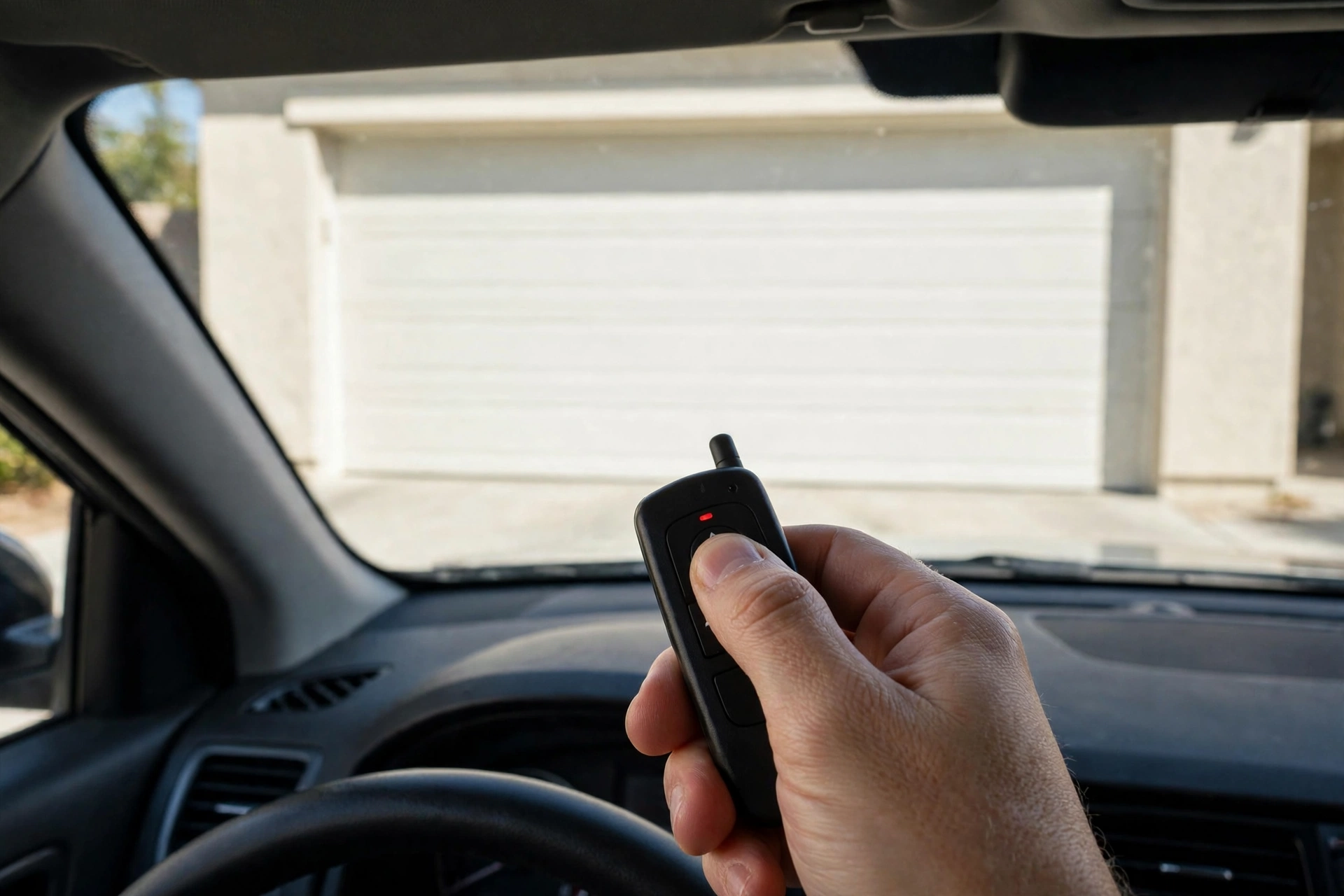
Work through these in order:
- Replace the remote battery. This fixes it more often than you'd think. Most remotes use a coin battery (CR2032) or a small 12V battery.
- Try the wall button. If the wall button works but the remote doesn't, the problem is the remote or its programming, not the opener.
- Check the opener's lock button. Many wall consoles have a "lock" or "vacation" button that disables remotes. If it's lit or engaged, press it to unlock.
- Is the opener plugged in? Check the outlet. Then check your breaker panel, a tripped breaker is common after storms.
- Reprogram the remote. Check your opener's manual: usually you press the "Learn" button on the motor unit, then press the remote button. Takes 30 seconds.
- LED bulb interference. Some LED bulbs in the opener emit frequencies that jam remote signals. If the problem started after you changed the bulb, swap it for an opener-rated LED or incandescent.
If the wall button doesn't work either and power is fine, the opener itself may have failed. That's a $100–$300 repair or $300–$600 replacement.
Problem 2: The Door Opens, Then Immediately Closes
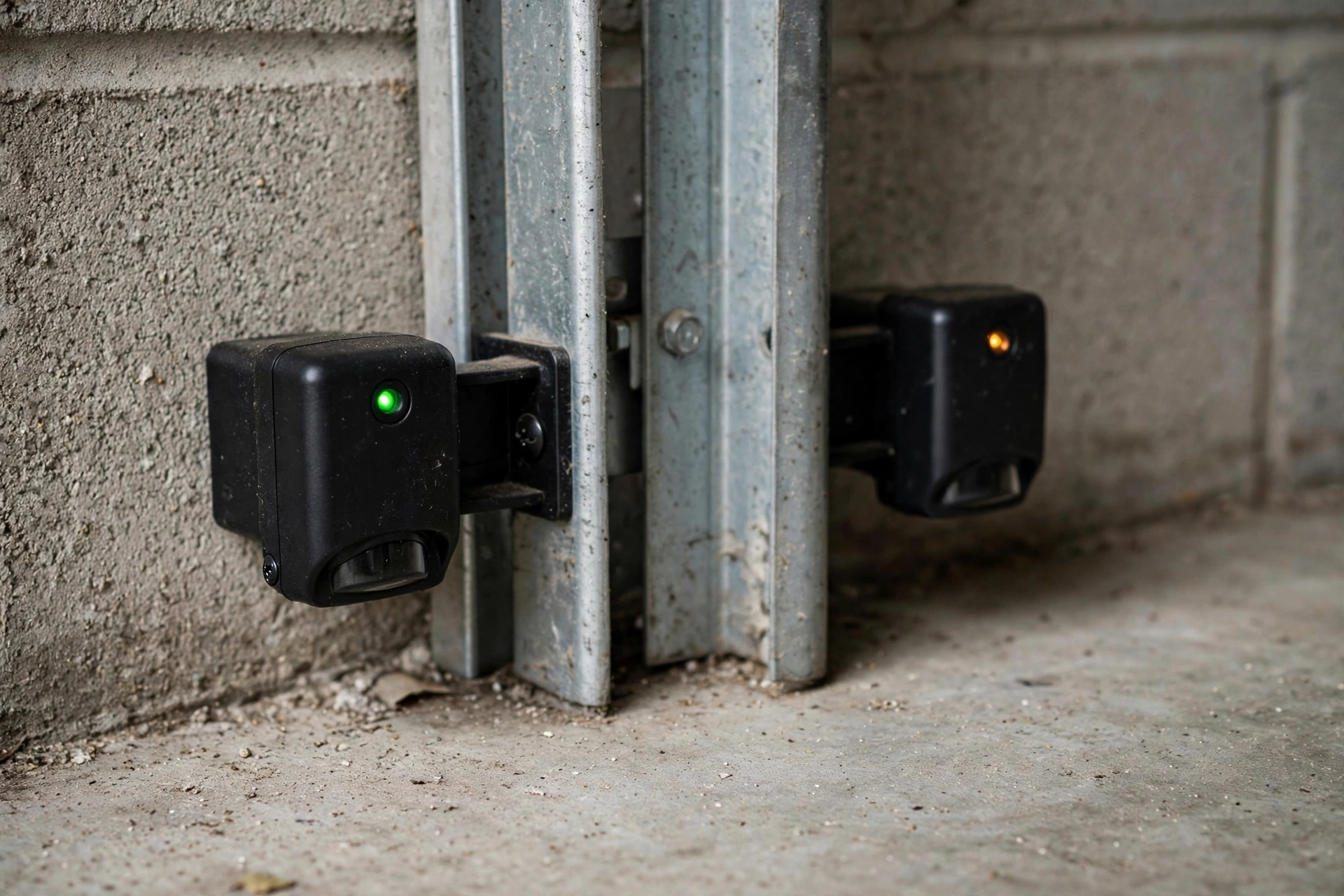
This is almost always the safety sensors, the little boxes mounted 4–6 inches off the floor on each side of the door.
- Check the indicator lights. Each sensor has a small LED. Both should be solid. If one is blinking or off, that's your problem.
- Clean the lenses. Dust, spiderwebs, and dirt block the beam. Wipe both lenses with a soft cloth.
- Check alignment. The two sensors must face each other precisely. If one got bumped (lawn equipment, kids' bikes), loosen the bracket, realign until both lights go solid, and retighten.
- Look for obstructions. Anything in the beam's path, even a leaf or a cobweb, triggers the reversal.
- Check the wiring. If lights stay off after cleaning and aligning, a wire may be pinched or chewed. That's usually a pro fix.
If sensors are solid and the door still reverses, the opener's close-force setting may need adjustment, or the door is binding in the track. Force adjustments are in your opener manual, but if the door is binding, get a pro to find out why before increasing force.
Problem 3: The Door Only Opens Halfway (or Won't Open at All)
This one has a few very different causes:
Broken spring (most common)
Look at the spring above the door. A visible gap in the coil = broken spring. The opener is designed to guide a balanced door, not lift a 200-pound dead weight. Symptoms: opener hums and strains, door lifts a few inches and stops, or the door feels extremely heavy in manual mode.
This is not DIY. Spring replacement is $150–$350 and takes a pro about an hour. See our cost guide for details.
Disengaged opener
If someone pulled the red emergency release cord (kids love this), the opener is disconnected from the door. You'll hear the motor run but the door won't move. To reconnect: with the door fully closed, pull the cord toward the door (not straight down) until it clicks, then run the opener once.
Track obstruction or damage
Look along both tracks for debris, bent sections, or objects wedged in. Small debris you can clear yourself. Bent track = pro repair ($125–$250).
Limit settings
Openers have travel-limit screws or digital settings controlling how far the door moves. If these drifted, the door stops early. Your manual shows how to adjust them. If adjusting doesn't hold, the logic board may be failing.
Problem 4: The Door Is Suddenly Very Loud
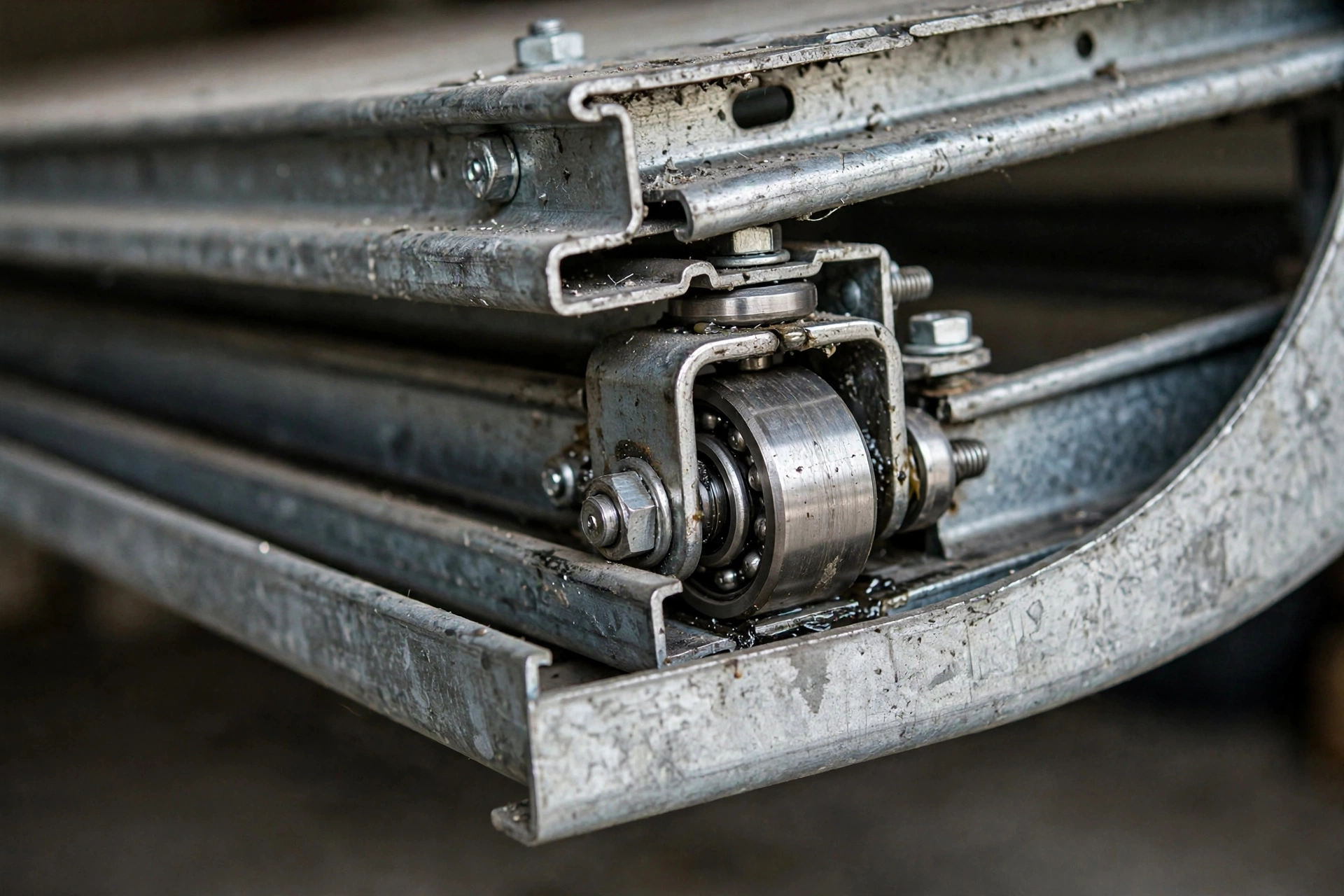
New noises are your door asking for attention. Decode them:
- Squeaking/squealing: Dry rollers or hinges. Lubricate with silicone-based spray (not WD-40, it attracts dust). If it persists, rollers may be worn.
- Grinding: Rollers failing, or the opener's gear assembly wearing out. Inspect rollers for cracks or flat spots.
- Banging/slamming when closing: Worn springs not controlling the descent, or the close-force set too high. Get this checked, a slamming door damages everything it touches.
- Rattling: Loose hardware. Go around with a socket wrench and snug every bolt on the door and track (not the spring hardware, leave that alone).
- Popping: Often a torsion spring about to fail, or sections shifting. If popping is new and loud, schedule service before it becomes a breakdown.
Real talk: a $150 tune-up (lubrication, hardware tightening, balance check, roller inspection) once a year prevents most noise problems and catches springs before they snap. In Franklin's humidity, this matters more than in dry climates because rust accelerates everything.
Problem 5: The Door Is Off Its Track
Common causes: something hit the door (car bump, basketball), a cable snapped and let one side drop, or rollers broke and jumped the track. A pro will reset the door, replace damaged rollers or cables, and realign the tracks.
Problem 6: Power Outage, Car Trapped Inside
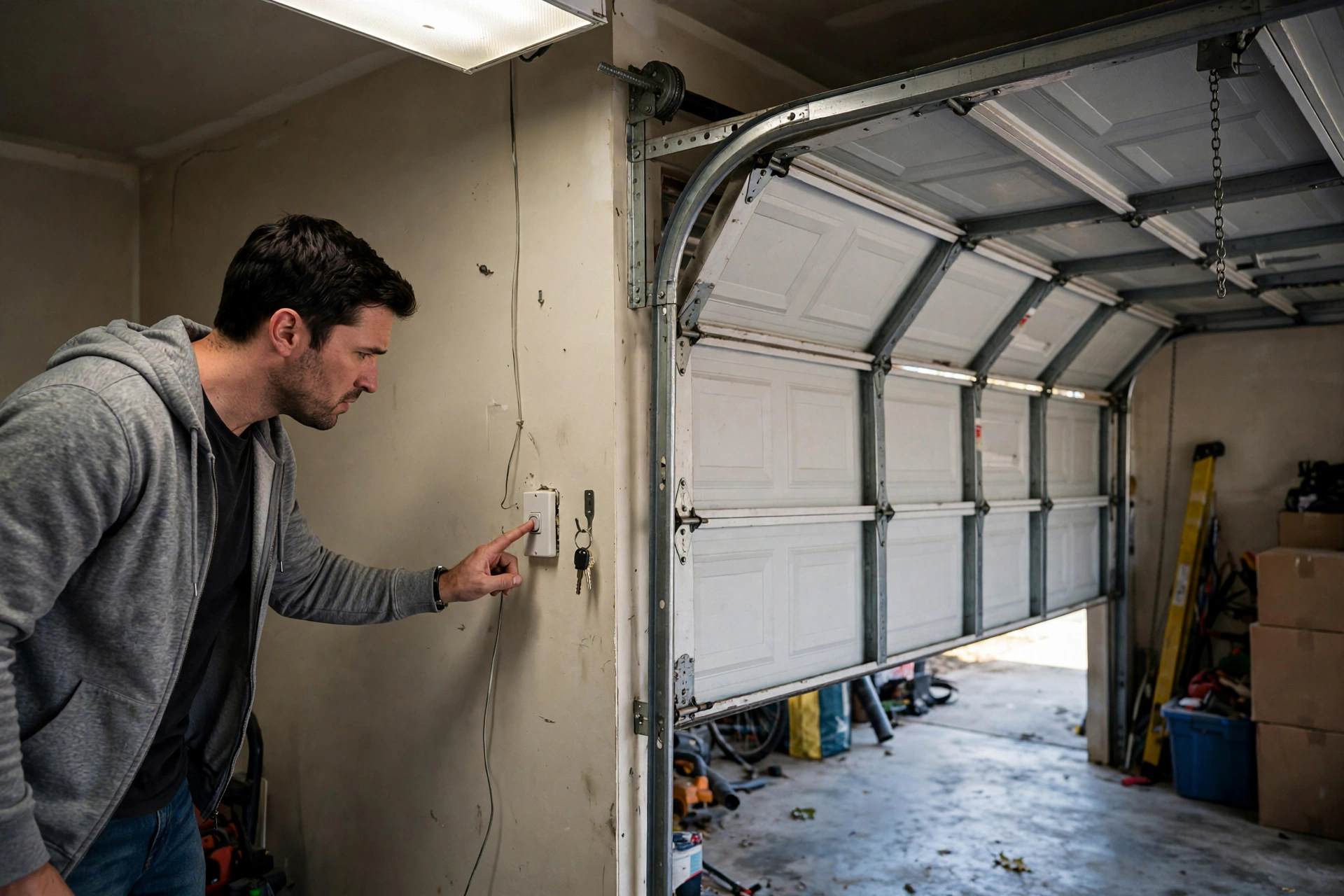
- Find the red emergency release cord hanging from the opener trolley.
- Pull it down and back (toward the door) to disconnect the opener. If the door is fully closed, pull straight down.
- Lift the door manually. It's heavy (100–200+ lbs). Lift with your legs, keep your back straight, and get help if you need it.
- Lower it carefully when you return, then reconnect by pulling the cord toward the door until it clicks, and run the opener once to re-engage.
Important: if the door feels extremely heavy or won't stay open on its own, the springs are likely broken or weak. Do NOT leave a door propped open in this condition, it can slam shut. Lower it fully and call for service.
Monthly 5-Minute Maintenance (Prevents Most Problems)
- Balance test: Disconnect the opener (red cord) and lift the door halfway. It should stay put. If it falls or shoots up, the springs need professional attention.
- Reversal test: Place a 2x4 flat on the floor under the door and close it. The door should reverse on contact. If it doesn't, adjust the force setting or call a pro, this is a safety issue.
- Visual inspection: Look at springs, cables, rollers, and track for rust, fraying, cracks, or looseness.
- Lubricate: Silicone spray on rollers, hinges, and springs. Wipe the tracks clean (don't lubricate tracks, it collects grime).
- Sensor check: Wave a broomstick through the beam while closing. The door should reverse immediately.
When to Call a Professional in Franklin (The Short List)
- Broken or stretched springs (visible gap, door too heavy)
- Snapped, frayed, or loose cables
- Door off its track or hanging crooked
- Opener motor runs but nothing moves (after checking the release cord)
- Door slams shut or won't stay open
- Anything involving spring hardware, cable drums, or bottom brackets
- You've tried the DIY steps and it's still not working
If the problem turns out to need parts or labor, our 2026 Franklin cost guide tells you exactly what fair pricing looks like. And if the door is old enough that repairs keep stacking up, read repair vs. replacement: how to decide.
Frequently Asked Questions
Why won't my garage door open with the remote?
Dead battery is #1. Then check: wall lock button engaged, opener unplugged, tripped breaker, remote needs reprogramming, or LED bulb interference.
Why does my garage door open then immediately close?
Almost always safety sensors: dirty lenses, misalignment (blinking light), or something blocking the beam. Both sensor lights should be solid.
Why is my garage door so loud all of a sudden?
Sudden noise = worn rollers, loose hardware, dry hinges, or a failing opener gear. Squeaking is usually lubrication; grinding or banging needs professional diagnosis.
Can I manually open my garage door if the power is out?
Yes. Pull the red emergency release cord, then lift manually. It's heavy, get help. If it won't stay open, the springs are bad, lower it fully and call a pro.
Why does my garage door only open halfway?
Broken spring is the most common cause. Also check: disengaged opener (red cord pulled), track obstruction, or limit settings.
Is it safe to adjust garage door springs myself?
No. Torsion springs store lethal amounts of energy. Thousands of injuries per year. This is strictly professional work, every time.
Why does my garage door remote work sometimes but not always?
Weak battery (most common), LED bulb interference in the opener, or a dying remote. Fresh battery first, then try reprogramming.
Still Stuck? We'll Diagnose It Today in Franklin, TN
Same-day service across Franklin and Williamson County. Upfront written quotes, and the diagnostic fee is credited toward your repair.
Call (629) 654-6541This guide covers safe homeowner-level troubleshooting. Spring, cable, and structural work should always be done by a licensed professional.